01 / Recover
Source the fiber.
The published project describes feedstock from end-of-life wind blades and automotive composite parts.
Carbon Cleanup and Caracol explored a route from recovered carbon fiber to large-format printed tooling for wind-energy applications.
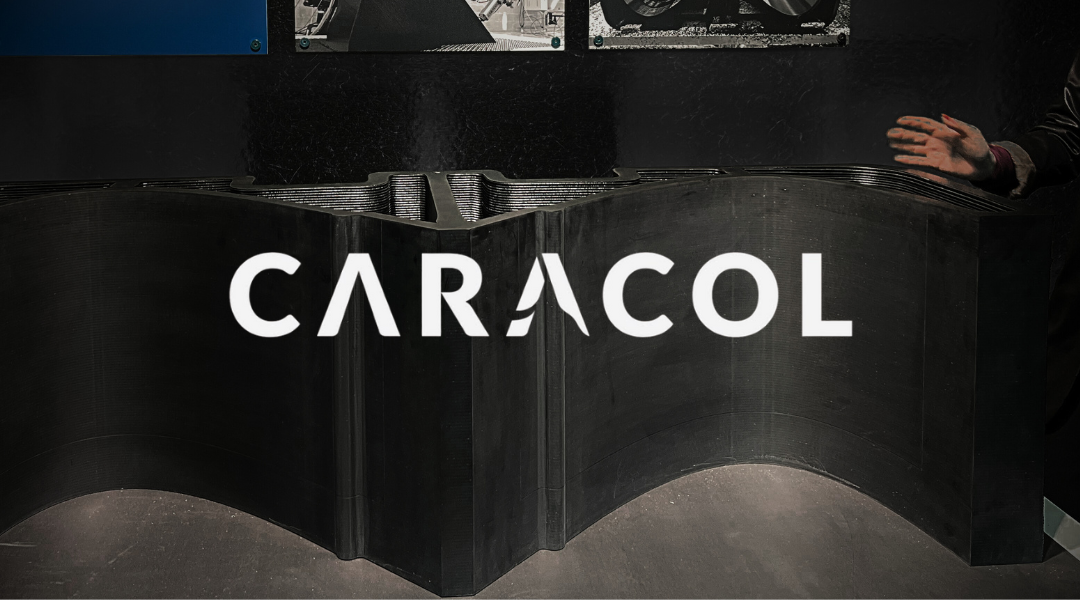
Tooling needs a material that prints reliably and serves its intended use. At the same time, composite waste from industrial processes needs a credible second application.
The published project describes feedstock from end-of-life wind blades and automotive composite parts.
Carbon Cleanup supplied a recycled-carbon-fiber-based feedstock for large-format additive manufacturing.
Caracol used its robotic printing platform to produce lamination tooling for smaller wind-blade applications.
The project demonstrates an application pathway for recovered fiber in tooling. Suitability, lead time and environmental impact need to be assessed for each new project.
Back to all case studies →Describe the part, printing process and material requirements you want to explore.
Discuss a material →