
CARB-E
Purpose-built mechanical processing for composites. Material-specific recipes automate the route from qualified input to a defined recovered output.
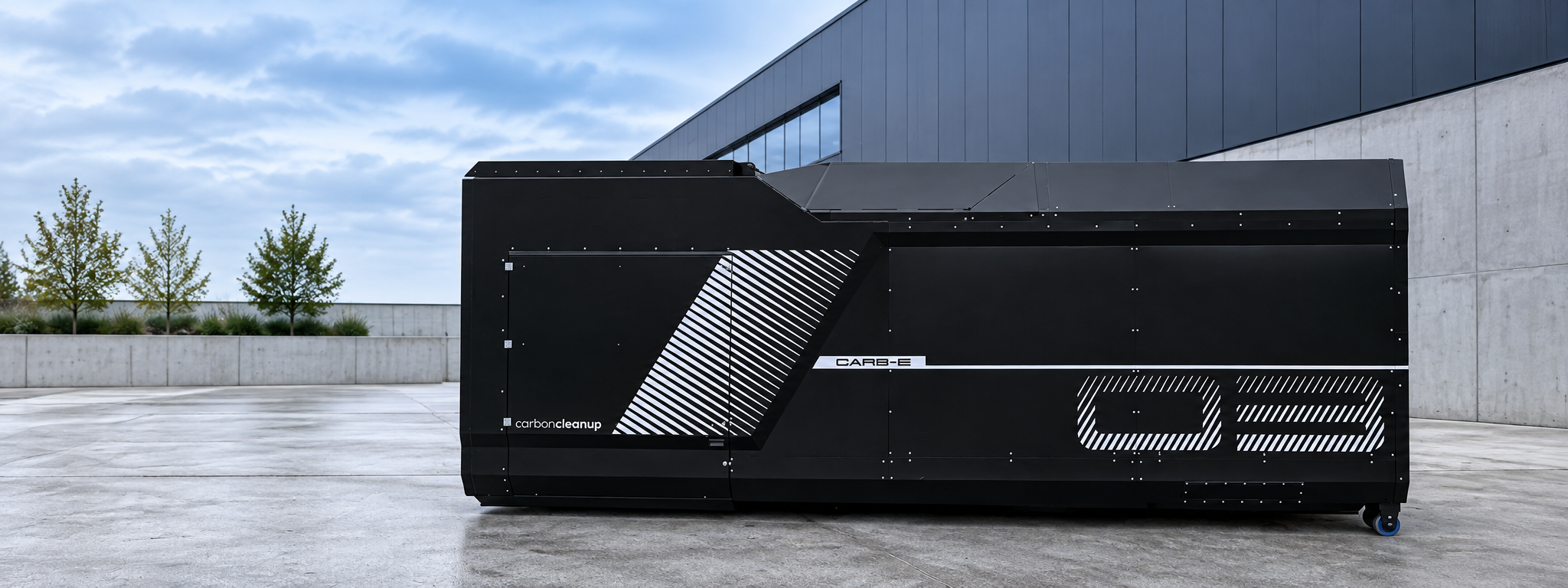
CARB-E is Carbon Cleanup’s mobile, purpose-built mechanical processing unit for composite manufacturers. It brings the recycling system to the waste and works with OCTOBUS as one connected unit from processing through to bagged output.
Siemens Industrial AI-assisted. Material-specific recipes. Repeatable, traceable output routes.
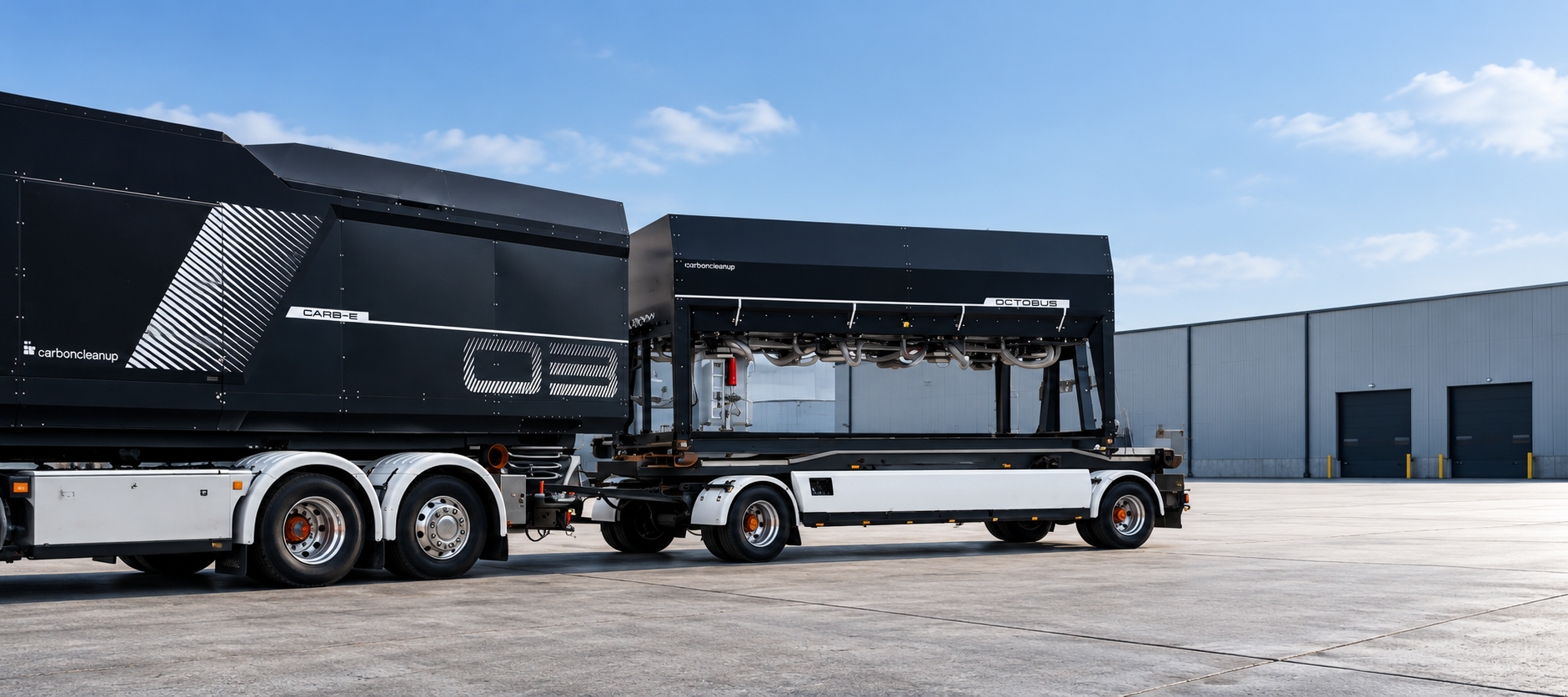
Mobile by design
CARB-E and OCTOBUS travel as one connected system: processing and controlled bagged output where the composite residue is created.
CARB-E and OCTOBUS are connected by lines and operate as one on-site system. Material intelligence selects the route, CARB-E processes the stream and OCTOBUS automatically fills the sorted recovered output for hand-off.
Purpose-built mechanical processing for composites. Material-specific recipes automate the route from qualified input to a defined recovered output.
OCTOBUS automatically fills sorted material into separate removable bags, ready for storage, transport, formulation or its next application.
Material intelligence selects the right route, CARB-E applies it and OCTOBUS delivers the recovered material in a form ready for its next use.
Composite offcuts, scrap or end-of-life parts create handling, storage and disposal pressure.
Siemens Industrial AI-assisted material intelligence supports recognition of qualified incoming material and selection of its recipe.
The mobile mechanical processing unit applies the material-specific route where the waste is created.
The connected output bus automatically fills sorted recovered material into bags for the next buyer or application.
CARB-E and OCTOBUS form an automated processing and material-handling sequence, with a defined recipe and batch record for every qualified material stream.
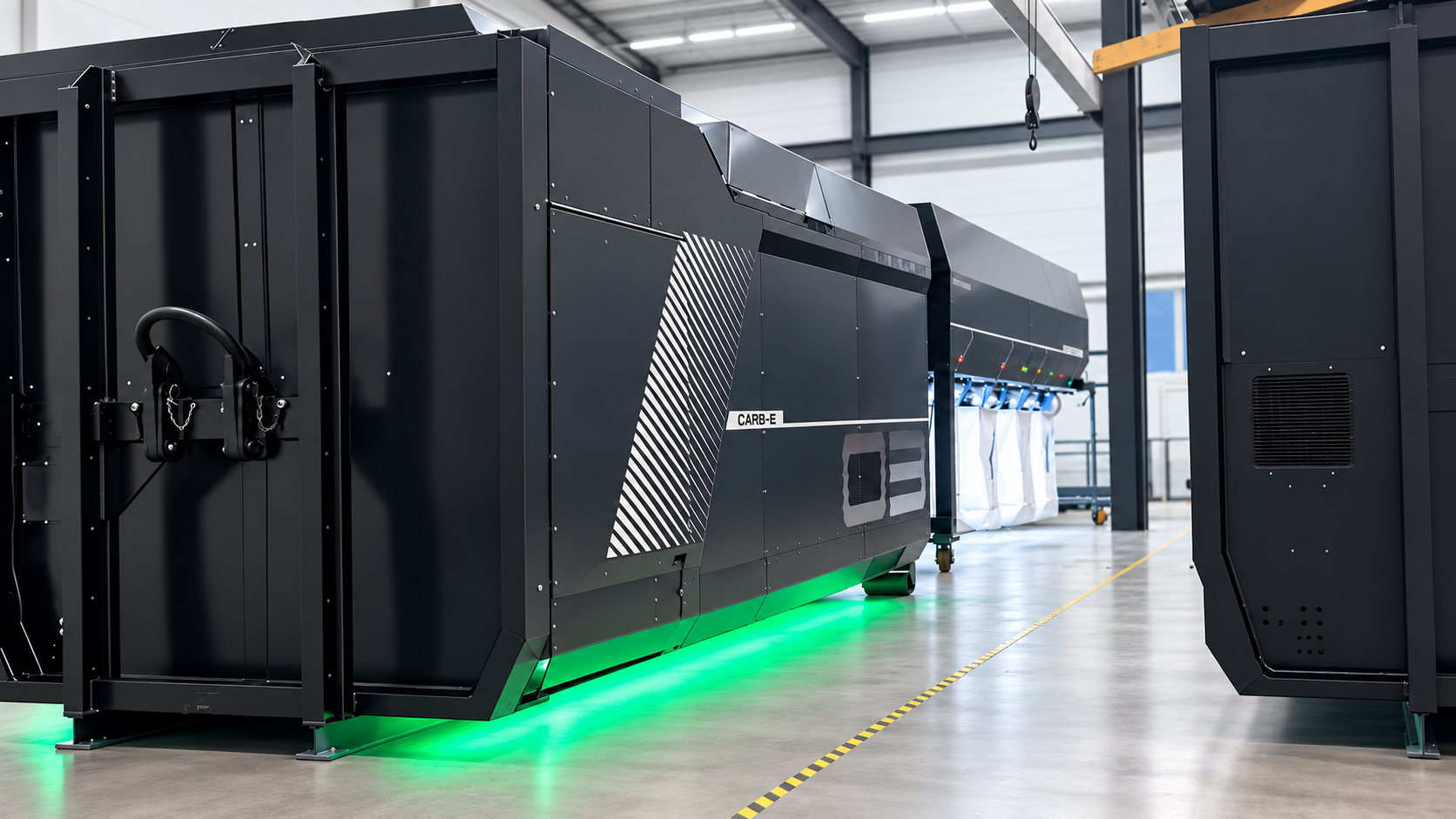
The loading sequence opens the access door automatically while extraction is active, supporting controlled handling of incoming composite material.
CARB-E mechanically prepares qualified input using the selected, material-specific process route.
Physical sorting separates the processed material into defined fractions for the intended fiber length, distribution and quality target.
A three-stage filtration system is designed to capture process dust within the system during operation.
Siemens control and Industrial AI-assisted material intelligence link the qualified input, recipe and output route in a documented batch record.
Level sensors manage automatic Big Bag filling. A configured station can fill up to eight bags and notify the operator when a bag change is required.
The assessment supports a safe start. CARB-E remains the solution: its process route is set around the customer’s material, site and intended outcome.
Siemens Industrial AI-assisted material intelligence supports the classification of fiber, matrix, condition and contamination.
The system selects a material-specific route for the qualified input, enabling the same defined process to be used again.
The mobile mechanical processing unit reduces and conditions qualified composite residues at the source.
Connected as one unit, OCTOBUS automatically fills sorted material into bags for the next buyer or application.
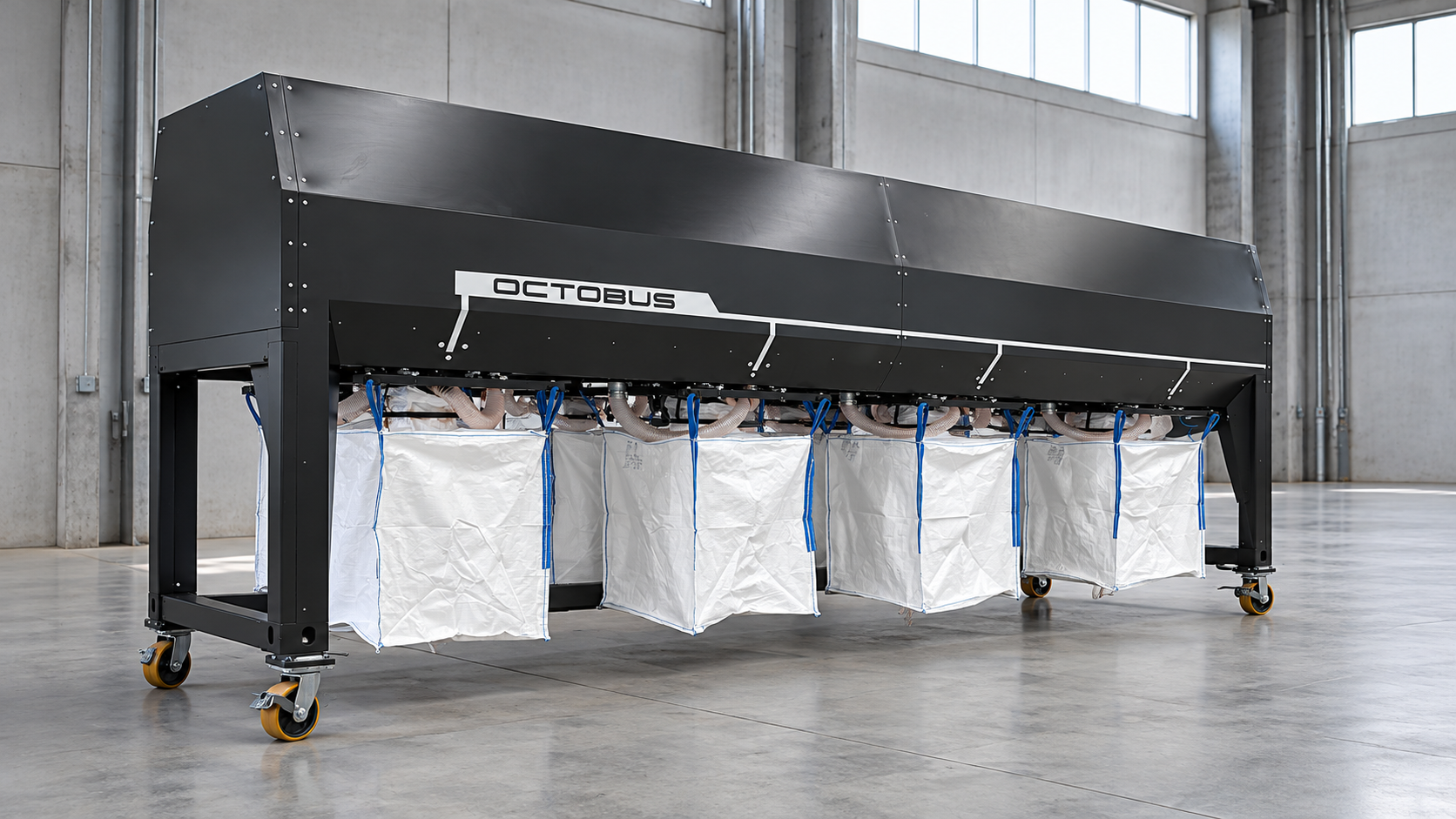
OCTOBUS is the connected output system of CARB-E. It automatically fills sorted recovered material into separate bags, so the output can move on without a new manual handling step.
For a useful first assessment, provide the fiber and matrix system, a representative sample, approximate annual quantity, part or scrap geometry, and any known contaminants. Carbon Cleanup can then define trials, assess the recovered fraction and discuss the intended application.
Project-specific qualification: The accepted input, process window, granulate properties and suitability for a subsequent product require testing. No universal output specification is implied.
Send the material type, expected volume and target use. The first discussion defines what needs to be measured before a process route can be proposed.
Discuss your material →