1,8m Wind Energy Mold made with 100% Recycled Carbon Fiber
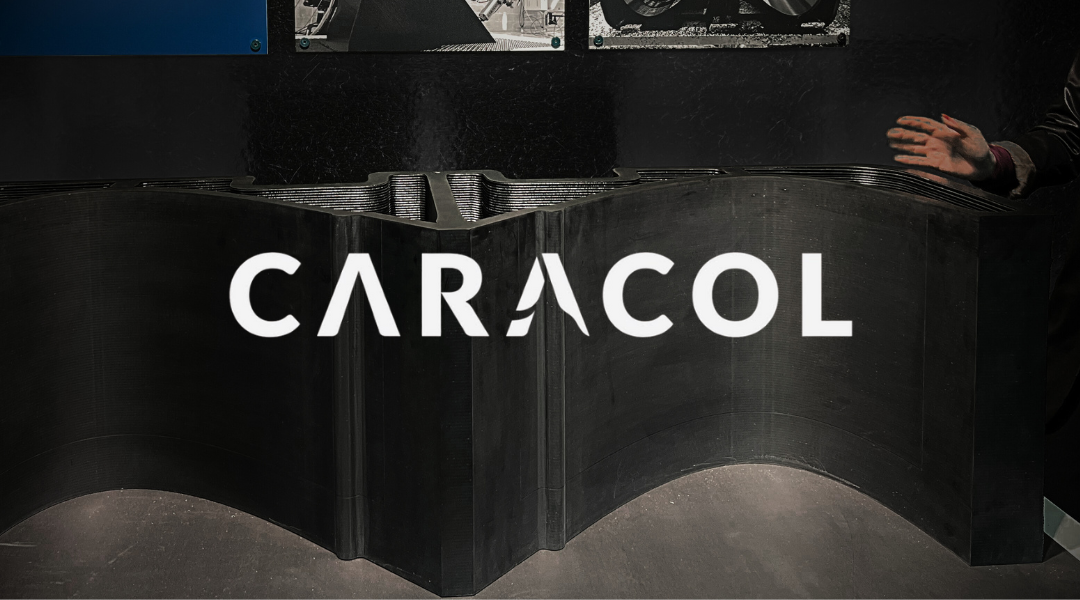
Wind Energy: Using Recycled Carbon Fiber and LFAM for Sustainable Wind Blade Tooling
Overview
As the demand for sustainable energy and circular production accelerates, Carbon Cleanup and Caracol have pioneered a new approach to large-format additive manufacturing (LFAM) using recycled carbon fiber from end-of-life wind turbine blades and automotive components.
This case study highlights how we collaborated to turn waste into value: by producing 3D-printed lamination tools for smaller wind blades using a low-carbon, high-performance recycled composite-setting a new standard for green tooling, production efficiency, and design freedom.
The Challenge: Waste from High-Performance Materials
Carbon fiber is one of the most sought-after materials for lightweight and durable structures- but it's also difficult to recycle, and waste rates are high in industries like wind energy and automotive manufacturing.
- 30–50% of carbon fiber becomes waste during production.
- Thousands of tons of composite waste from wind turbine blades are landfilled or incinerated annually.
- Traditional tooling methods rely on energy-intensive materials and long lead times, with limited reusability.
Carbon Cleanup set out to solve two problems at once:
-Recycling complex composite waste
-Using it in next-gen manufacturing for sustainable impact
The Solution: Recycled Carbon Fiber + Caracol’s LFAM System
Working closely with Caracol, a leader in LFAM solutions, we supplied recycled carbon fiber-based composite pellets sourced from end-of-life wind blades and automotive parts.
Caracol’s robotic 3D printing platform then used these recycled materials to manufacture large-scale lamination tools for small wind blade applications.
Why this is groundbreaking:
- Low-footprint materials: Diverted waste from landfill and reduced embodied carbon.
- LFAM process: Eliminated traditional molds and CNC tooling.
- Fast production: Shortened lead times by up to 70%.
- Design flexibility: Enabled geometry-optimized tools for improved blade performance.
Results & Impact
-Waste diverted: Reused composite waste from wind and auto sectors
-Lead time: Reduced tooling production time by up to 70%
-Carbon footprint: Lower emissions compared to virgin material use
-Design freedom: Enabled complex geometries not possible with traditional methods
-Circular economy: Proved that composite waste can be reintegrated into industrial production
The tools produced with Caracol’s system using our recycled feedstock proved mechanically robust, geometrically precise, and environmentally superior- a true example of circular manufacturing in action.
Why This Matters for the Future of Manufacturing
This collaboration isn’t just a one-off , it’s a blueprint for scalable sustainable manufacturing. It shows how recycled materials in large-format additive manufacturing can help industries:
- Achieve net-zero and ESG goals
- Innovate faster and more sustainably
- Replace outdated, wasteful tooling processes
As demand grows for green energy and cleaner manufacturing, these types of partnerships will be essential to build a circular economy for advanced materials.
What’s Next for Carbon Cleanup?
We're expanding our portfolio of recycled carbon fiber applications, from tooling to structural parts and partnering with more additive manufacturing leaders across Europe.
If you're a manufacturer, designer, or sustainability leader looking to reduce your environmental impact without compromising performance, let's talk.
Contact us to learn more or request sample materials: sales@carbon-cleanup.com
Key Takeaways
- Recycled materials are viable for high-performance LFAM tooling.
- Carbon Cleanup and Caracol have demonstrated a circular solution for wind blade manufacturing.
- The future of tooling is faster, cleaner, and more sustainable- thanks to innovations in additive manufacturing.

.svg)
.svg)